Thursday, April 19, 2012

Philips Sonicare HX6711/02 HealthyWhite 710 Rechargeable Electric Toothbrush

Philips Sonicare HX6711/02 HealthyWhite 710 Rechargeable Electric Toothbrush

Philips Sonicare HX6711/02 HealthyWhite 710 Rechargeable Electric Toothbrush
Brand : Philips | Rate : | Price : $79.99
Post Date : Apr 19, 2012 05:48:22 | Usually ships in 24 hours

Philips Sonicare HX6711/02 HealthyWhite 710 Rechargeable Electric Toothbrush

  • Advanced toothbrush uses sonic technology for whitening teeth
  • Can whiten teeth up to two shades in just two weeks
  • SoniCare technology clinically proven to remove more plaque
  • Quadpacer and Smartimer ensure a thorough cleaning every time
  • ProResults brush head provides increase coverage while remaining gentle on the gums

More Specification..!!

Disclaimer : This site/page does not included in any the parts with amazon.com but it is participant in the amazon services LLC associates program by advertising and linking to amazon.com , Certain content that appears on this site comes from amazon services LLC. This content is provided 'as is' and is subject to change or removal at any time.

Brand New Wind Song By Nobility, Silverplate Sugar Spoon... Promotions Fluorescent Tubes T5

Thursday, April 12, 2012

Panasonic ES8103S Men's 3-Blade (Arc 3) Wet/Dry Rechargeable Electric Shaver with Nanotech Blades, Silver

Panasonic ES8103S Men's 3-Blade (Arc 3) Wet/Dry Rechargeable Electric Shaver with Nanotech Blades, Silver

Panasonic ES8103S Men's 3-Blade (Arc 3) Wet/Dry Rechargeable Electric Shaver with Nanotech Blades, Silver
Brand : Panasonic | Rate : | Price : $84.73
Post Date : Apr 12, 2012 18:32:08 | Usually ships in 24 hours

Panasonic ES8103S Men's 3-Blade (Arc 3) Wet/Dry Rechargeable Electric Shaver with Nanotech Blades, Silver

  • Sharp nanotech blades with an arced foil provide a close, touchable shave
  • Adjustable pivoting head follows facial contours for a precision shaving experience
  • 13,000 RPM motor provides a constant stream of power for a consistent shave
  • Wet or dry shave design for use in or out of the shower
  • Pop-up trimmer for detail grooming to keep you looking your best
  • Turbo cleaning mode accelerates shaver to 17,000 RPM to shake of residue that might stick to your blade

More Specification..!!

Disclaimer : This site/page does not included in any the parts with amazon.com but it is participant in the amazon services LLC associates program by advertising and linking to amazon.com , Certain content that appears on this site comes from amazon services LLC. This content is provided 'as is' and is subject to change or removal at any time.

Buy Sim Classics: Maxis Collections 2 (simcity Classic / Simearth / Simfarm)... Online Spyder Vertical Air Adapter - Paintball...

Sunday, April 8, 2012

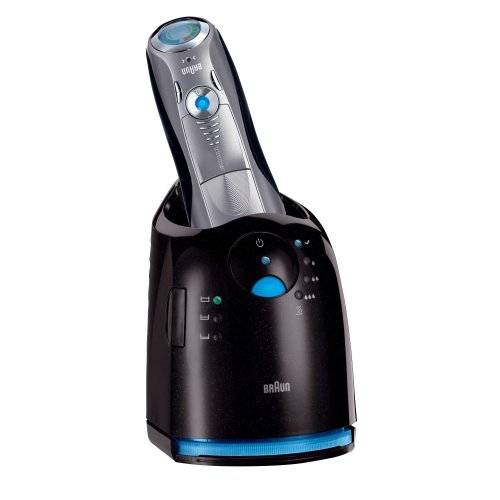
Braun Series 7- 790cc Pulsonic Shaver System, Silver

Braun Series 7- 790cc Pulsonic Shaver System, Silver

Braun Series 7- 790cc Pulsonic Shaver System, Silver

Brand : Braun
Rate :
Price : $199.97
Post Date : Apr 08, 2012 11:30:06
Usually ships in 24 hours

Braun Series 7- 790cc Pulsonic Shaver System, Silver

Braun's most advanced technology for our most complete and comfortable shave. It contains the Braun Clean and Renew cleaning solution

Disclaimer : This site/page does not included in any the parts with amazon.com but it is participant in the amazon services LLC associates program by advertising and linking to amazon.com , Certain content that appears on this site comes from amazon services LLC. This content is provided 'as is' and is subject to change or removal at any time.

Paul Mitchell Blow Dryer Ideas

Wednesday, January 11, 2012

EIKO DJL 120V/150W T-14 G17q-7 Base Projector Bulb

!±8±EIKO DJL 120V/150W T-14 G17q-7 Base Projector Bulb

Brand : Wiko
Rate :
Price :
Post Date : Jan 11, 2012 04:21:36
N/A


WIKO LAMPS, VOLTAGE: 120 VOLT, POWER: 150 W, AVERAGE LIFE: 15 HRS, ANSI CODE: DJL, FEATURES: HIGHEST QUALITY, REPLACEMENT CHOICE IN

Order Nike Dunk High White Black

Saturday, January 7, 2012

The Innovative Symbols - A Brief History of the Barcode

!±8± The Innovative Symbols - A Brief History of the Barcode

When shopping, you don't even give them a second thought. Nobody does. And why would they? Barcodes are just a little white square with some black lines, in an insignificant location on the packaging. They have nothing to do with the marketing pizazz of the package, nothing to do with the product itself, all it does as far as the consumer is concerned is allow the product to be scanned at the checkout so it can be paid for. Not exactly the highlight of the shopping experience. However, I don't think anything has changed the retail environment more than that little obscure white and black square.

Does anyone ever really think about how this all got started? Where and when did this become such a large part of the retail world? Well, I did. I started to realize that everywhere I looked there was some sort of barcode. And today there are so many different types and different uses for them that it is astounding. So let me share with you a short history of how these little stripes of black lines became such a big part of our lives. You might be surprised to see how barcodes entered our everyday lives.

Believe it or not, it all started back in 1948 with a man named Bernard Silver. Mr. Silver was a grad student at the Drexel Institute of Technology in Philadelphia. One day he overheard the president of a rather large food chain at the time asking one of the Deans to do some research into a way for some sort of system to read product info during the checkout process. Now you might think, what is so strange about that? That is exactly what the codes are used for today. Sure. But wait, there's more.

Mr. Silver heard the conversation and decided he was going to work on this himself. So Silver told one of his friends, Norman Joseph Woodland about what he had heard and they started to work on a variety of systems. They came up with all sorts of ideas and plans. None of which resemble what we use today. But after working on the project for some time, Woodland became inspired by Morse Code. After some thought he finally came up with an idea and he scribbled his very first barcode in the sand at a beach by taking the Morse Code and extending the dots and dashes of the code downward making long narrow and wide lines out of them. Of course now they had to come up with some way for a machine or device to read the lines. Back at their "think-tank" which was Woodland's fathers Florida apartment they designed a device that was adapted from technology used in the film industry. Using devices designed to read optical soundtracks in movies, he attached a 500 watt light bulb to it that would shine through the paper containing the code onto a RCA 935 photomultiplier tube from a movie projector. He later figured out that his system would work much better if the code were printed in a circle rather than a line so it could be read from any angle. His idea worked. Soon, in 1949, Woodland and Silver filed for a patent and were later awarded one in 1952 for a "Classifying Apparatus and Method". This included the linear and bull's-eye (circular) printing patterns as well as the machine needed to read the codes. Barcodes were born.

Now considering where the thought for this invention came from, you would think that once the patent was achieved the codes would be put to use in the grocery industry. But that is not what happened, and to be honest, the barcodes were far off at this point from being used in any retail setting. After gaining the patent it was sold to a company named Philco. They were a big name back then in the realm of electronics and electronic consumer devices. Such things as air conditioners, refrigerators, car radios, etc.. were all things that Philco was known for. I'm sure Philco saw something in the invention that caused them to purchase the patent. But what they saw was dollar signs because they turned around and sold the patent to RCA later the same year they purchased it.

During this time, the railroad industry was working on a system of their own. Because railroad cars were traveling nation-wide and were often transferred from one line to another, there needed to be a way to track the cars. A man by the name of David J Collins was well aware of this having just spent his undergraduate days working for the Pennsylvania Railroad. After graduating he went to work for Sylvania who was working on Military computer projects. When Collins began work at Sylvania he tried his hand at a project that would solve the railroads problems. He worked on a system that was slightly different than the current barcode technology of the time. He used reflective colored stripes that could be read by computers that Sylvania already had produced and tested. By 1967 the railroad had his system installed in about 95% of all the trains in service. By this time Collins saw the great potential for his system or barcode systems in general and took this idea to the higher ups at Sylvania. Much to Collins' dismay they denied exploring other avenues because they figured they were making money from the railway system and decided to put their money and efforts into that. Collins then quit Sylvania and formed his own company called Computer Identics Corporation.

After working on the systems for a couple years, Collins and his company made some advancement in the barcode field of study. For example they added lasers which were just coming into their own as a technology at the time, to read the codes. And you have to keep in mind, computers at the time were still rather large. So when Computer Identics Corporation were able to make their systems a tiny bit smaller than what was possible at the time it was a big step. And that was what they were doing. They were working on streamlining the process and the machinery. At that time, the Spring of 1966 they installed their first two systems. One went into a General Motors plant in Pontiac, Michigan, where it was used to monitor the distribution of automobile axle units. The other was installed in General Trading Company's distribution facility in Carlsbad, California. It was used to help direct shipments on conveyor systems to the proper loading bay doors.

This had worked to prove that the system was indeed feasible in an industrial setting. But this was still very far off from the barcoding systems that we are used to today. It was RCA who helped to move the technology into that direction. Because although the Computer Identics Corporation barcodes were working, they were only able to store two digits worth of data. What RCA was working on would require much more. In 1966 they had attended a grocery industry meeting in which the barcode system had been discussed. This helped to show RCA that there was a need for the technology and pushed them into spending the money to develop the technology.

It wasn't until 1971 that RCA had developed something worth trying to sell. They had worked with grocery industry experts and others to come up with a standardized system that stored more information, was easy to print and reproduce, could be scanned from any angle, and could be read from a distance. RCA was working with the bull's-eye system which was the circular printed pattern. They thought this was the best way to go. However during their long and extensive testing it was found that what made the codes readable from any angle, also made printing an issue. Because of the rounded print pattern, the ink could sometimes smear and when that happened it made the code unreadable.

Industry competition in that day was as fierce as it is today. And with a new technology on the horizon that could possibly revolutionize an industry, many companies were involved. The two that stood out however were RCA and IBM, but IBM had a trump card. They had one of the original inventors on their staff. Back in the 1951 Norman Joseph Woodland took a job with IBM and in 1971 when RCA was taking the lead role in the barcode game IBM stepped up with their new entry into the barcode pool: the Universal Product Code. More commonly known as the UPC.

The major benefit that the UPC had over the bull's-eye code was that instead of a circular pattern, it was printed in a linear fashion. This meant that if ink did happen to smear during the printing process, it would smear in the direction of the lines, making the code still readable. However by this time many different companies who had all entered the game all had their own proprietary codes and designs. But at a time when business demanded standardization, IBM's more readily readable and more easily produced UPC won out. But the code was not all that needed to be standardized. This meant that the machines reading the codes would also need to be standardized. So a movement was started to make sure this would take place. This meant that companies would have to give up on the ways they all designated and organized their products. It was not easy, but the amount of money that companies would save in almost every area eventually convinced them to do so. And in an effort to continue this trend a new Uniform Code Council (UCC) was formed.

Over the next few years the UPC code worked its way into almost every facet of the retail industry. Every store and manufacturer in the country has adopted the UPC. If they haven't it is because they have adopted another form of coding, but it all has ties directly to the invention of the UPC. Every industry has some way of coding their product or parts of a process that they perform. It makes sense when you consider how everything ties into computers. By doing so things are easier tracked, inventoried and handled. This not only saves money, but obviously saves time, resources and manpower. Today you have many codes entering the mainstream. And with every code there has to be a system to read and manage the codes.

The system created all those years ago never made any of the original inventors rich. But they had a major hand in changing the way a whole country, and even better yet, a whole world does business. There is not an area of business that is not somehow touched by barcodes. In 1992 Woodland was given the National Medal of Technology by President Bush. This may be the only official recognition given to Woodland. But he can stand tall knowing in his heart what he has done. He has changed the world of business forever in a way that no one else has or ever will.

So where will barcodes take us? It is a simple assumption to make that we will see barcodes in many different products as time goes on. People have made them tatoos. People have changed their names to resemble their name converted to a barcode symbology. With technology getting ever smaller, and microchips being embedded in many different things, barcodes will surely follow them. When you consider the amount of data that can be stored in the string of lines, and where they can be placed it is not surprising to think of where they could end up. We have chips inserted in pets to track them and in pens to record when certain words are written. The data needs to be stored and converted. And not all this information is public domain. People are always looking for ways to keep things private in an age where more and more is being exposed. Maybe barcodes will play a role. Or maybe they will just be used in a more simple manner. Just a data recording method, much like they are today. Maybe the technology to read them continues to be available to everybody like today in common cell phones. What uses can you think of for these? I bet the possibilities are endless.


The Innovative Symbols - A Brief History of the Barcode

Promotional Horizon Organic Milk Coupons Promotions Round Dining Tables With Extensions Wall Mount Dip Station Discount

Sunday, January 1, 2012

Sunday, December 25, 2011

Sylvania 69233 - XBO 100 W OFR Projector Light Bulb

!±8± Sylvania 69233 - XBO 100 W OFR Projector Light Bulb

Brand : Sylvania | Rate : | Price :
Post Date : Dec 25, 2011 14:14:45 | Usually ships in 1-3 weeks


  • Color Temperature: 6,200K
  • Average Lifetime: 500 hours
  • CRI: 98

More Specification..!!

Sylvania 69233 - XBO 100 W OFR Projector Light Bulb

Electrolux El6988 Grand Sale

Sunday, December 11, 2011

Sylvania 54692 - 2000T9.5/4CL/MO (BVW) Projector Light Bulb

!±8±Sylvania 54692 - 2000T9.5/4CL/MO (BVW) Projector Light Bulb

Brand : Sylvania
Rate :
Price :
Post Date : Dec 11, 2011 06:15:16
Usually ships in 1-3 weeks


2,000 watt 120 volt T9.5 Medium Prefocus (P40s) Base 3,200K BVW Projector / Stage / Studio Incandescent Sylvania Light Bulb

Thermos Insulated Mug Order Coupon Wireless Freezer Alarms Yamaha Psr E213 Keyboard Buy Now

Wednesday, December 7, 2011

Sylvania 69237 - XBO 150 W/CR OFR Projector Light Bulb

!±8± Sylvania 69237 - XBO 150 W/CR OFR Projector Light Bulb

Brand : Sylvania | Rate : | Price :
Post Date : Dec 07, 2011 20:00:44 | Usually ships in 1-2 business days

150 watt 17.5 volt 6,200K Short Arc Double Ended XBO Xenon Projector / Stage / Studio Incandescent Sylvania Light Bulb

  • Color Temperature: 6,200K
  • Average Lifetime: 2500 hours
  • CRI: 98

Order Furniture Stores Phoenix Arizona

Thursday, December 1, 2011

Sylvania 69235 - XBO 150 W/1 OFR Projector Light Bulb

!±8± Sylvania 69235 - XBO 150 W/1 OFR Projector Light Bulb

Brand : Sylvania | Rate : | Price :
Post Date : Dec 01, 2011 19:17:33 | Usually ships in 2-3 business days


150 watt 20 volt 6,200K Short Arc Double Ended XBO Xenon Projector / Stage / Studio Incandescent Sylvania Light Bulb

More Specification..!!

1080p Hdmi Dvd Player Best Quality Leupold Golf Range Finders Grand Sale

Sunday, November 27, 2011

Sylvania 69234 - XBO 150 W/1 Projector Light Bulb

!±8±Sylvania 69234 - XBO 150 W/1 Projector Light Bulb

Brand : Sylvania
Rate :
Price :
Post Date : Nov 28, 2011 00:16:56
Usually ships in 1-2 business days


150 watt 20 volt 6,200K Short Arc Double Ended XBO Xenon Projector / Stage / Studio Incandescent Sylvania Light Bulb

Martin D28 Cheap Celestial Seasoning Teas Fast Promotion Asics Cumulus

Saturday, November 26, 2011

Discount Light Bulbs

!±8± Discount Light Bulbs

There are several stores that carry all major brands of discount lighting. Prices are fixed very competitively in order to entice prospective customers. Both regular and online stores deal in discount light bulbs. Some stores lure customers with weekly special discount offers on light bulbs. Every week certain light bulbs are tagged with heavily discounted prices. These weekly specials are changed frequently, ensuring that some customers become regulars in order to pick up good discount deals.

Purchasing discount light bulbs can be good for maintaining a reserve supply of spare bulbs. A fair amount of window shopping will ensure that you get quality discounted bulbs easily. Discount light bulb dealers stock all varieties of light bulbs like regular household light bulbs, long-life bulbs, reflector bulbs, decorative bulbs, low-voltage bulbs, pool lamps, heat lamps, etc. Several stores offer quality brands at discount prices. They are able to do this due to arrangements with the manufacturer regarding trade volumes and stock lots.

Specialty light bulbs like Christmas lights, medical lights, fluorescent lighting, automotive lights, and halogen lights-you name it, and most discount light stores will have it.

Online discount light bulb stores enable you to compare brands for the best prices and then make a buying decision.

The most popular manufacturers like Carousel, Kodak, Sylvania, Philips, General Electric, Feit, and Westinghouse have arrangements with discount light bulb stores. So, one does not need to compromise quality for discount prices.

Most online stores contain a lot of information about light bulbs, and you can find out about different kinds of bulbs like halogen, fiber optic, fluorescent, automobile, projector, and black light. Information about how they work, what goes into their making, etc., is made available. You can also become familiar with terms like full spectrum, 12 volt, grow lights, ultraviolet, low-voltage, miniature bulbs, and the like.


Discount Light Bulbs

Catalog Olay Eye Lifting Serum Save Shure Model Stamina Ats Rowing Machine Discount

Tuesday, November 22, 2011

Sylvania 54614 - HPL750/240 (UCF) Projector Light Bulb

!±8± Sylvania 54614 - HPL750/240 (UCF) Projector Light Bulb

Brand : Sylvania | Rate : | Price :
Post Date : Nov 22, 2011 19:05:01 | Usually ships in 1-2 business days


750 watt 240 volt T6 Medium Bi-Pin Heat Sink (G9.5) Base 3,200K Clear HPL Projector / Stage / Studio Halogen Sylvania Light Bulb

More Specification..!!

Masterbuilt Smokehouse Fast Buy Respironics C Flex

Monday, November 7, 2011

A Buyer's Guide to Regular Tube TVs

!±8± A Buyer's Guide to Regular Tube TVs

Traditional CRT television screens have a number of important advantages over the newer technologies, not only in terms of the cost to buy them but in the ongoing costs of ownership as well. For instance, while a replacement light source for a DLP TV can cost as much as 0, an entire traditional tube television can be purchased for far less than the cost of that replacement bulb.

In fact it is the price that is the major selling point, and major advantage, of the traditional CRT TV. The prices of all televisions have been falling, but perhaps none have fallen quite so far and so fast as the prices for these traditional tube televisions. The smallest traditional tube televisions, those of 13" and less, can often be purchased for less than 0, and even the traditional 25" and 27" television models often retail for less than 0. In addition, many traditional tube televisions come with features like built in VCRs, built in DVD players and the like, making them even more versatile and useful.

Even the largest regular tube televisions retail for far less than LCD, plasma and DLP rear projection models. While the price of a 36" traditional tube television may still be over ,500, the cost of a comparable size LCD or plasma television would be thousands more. Of course it is important to shop around, but in general none but the largest and most feature laden traditional tube televisions will set you back more than about ,000.

In addition, traditional tube televisions offer true out of the box performance, making them a great choice for those who do not want to go through the hassle of setting up all the accessories that come with the newer technologies. In most cases all the buyer needs to do when purchasing a new CRT TV is to take it out of the box, hook up the cable TV, satellite TV or antenna signal, turn it on and use the remote control to find the channels. It doesn't get much easier than that, and that may be one of the reasons why these televisions continue to command such a large share of the market even after the advent of all those great new television technologies.

What to Look for in a Traditional Tube Television

When shopping for a new traditional tube television, whether as a replacement for an existing TV or for an additional room, it is important to look for the right features and benefits in that TV. One of the most important considerations is the inputs on the unit. The newest traditional tube televisions come equipped with a number of different inputs, not only for cable, satellite and antenna signals, but for computer inputs as well. It is important to look for the presence of a VGA connection, a DVI connection, or preferably both, as these connections will allow you to hook up a computer to the TV display.

Other common inputs on a traditional tube television include inputs for DVD players, VCRs, Laser Disc players and video games. If these inputs are an important consideration it is a good idea to go shopping with that in mind.

The Importance of the Right Cabling

One vital part of the television viewing experience that many television shoppers overlook is the importance of the type of cabling that is used to connect all that great equipment to the television screen itself. Buying cheap generic cables may save you a little money up front, but the lack of quality will be readily apparent to everyone who watches the TV. It is far better to spend a little bit more and to purchase the best cables you can afford. Buying the right cables is one of the best ways to get the most value for your money.

Speaking of value for your money, it is important to shop around as much as possible, whether you are shopping for a traditional tube television, a plasma screen TV, an LCD TV, a DLP TV or any other type of television technology. These days TVs are sold virtually everywhere, from the deepest discount retailers to the most high end specialty stores and electronics retailers. In addition, televisions of all kinds are sold on the internet as well, so shopping online is always a good idea.

When it comes to choosing a brand, there are certainly no shortage of choices. Virtually every electronics manufacturer in the world, from American firms and European manufacturers to all the Asian suppliers, have at least a few models of traditional tube televisions on the market, so shopping around among brands should not be a problem either. Some of the many manufacturers who make a variety of traditional tube televisions include such well known brands as Toshiba, Sharp, Samsung, Sony, Daewoo, Sylvania, RCA, Magnavox and Phillips, among others.

When shopping for a new television, whether it is a traditional tube television or one of the newer technologies on the market, it is important to look for the newest features and benefits in order to get the most value for your money. It is a good idea, for instance, to look for a television that is HDTV (high definition television) and DTV (digital television) ready, as this will ensure the TV can be used far into the future. One of the many benefits of a traditional tube television is its longevity, and buying an HDTV and DTV ready model will ensure that the TV remains usable no matter what changes may come in the future.

It is also a good idea to choose a traditional tube television with a flat picture tube. This flat screen technology helps to reduce glare and make for a more pleasant viewing experience. These flat picture tube TVs provide many of the same benefits as the more expensive flat screen LCD and plasma TVs, at a fraction of the price.
Gor more info. see http://www.planetomni.com


A Buyer's Guide to Regular Tube TVs

Discount Remote Temperature Data Logger

Sunday, October 30, 2011

Sylvania 69231 - XBO 75 W/2 Projector Light Bulb

!±8±Sylvania 69231 - XBO 75 W/2 Projector Light Bulb

Brand : Sylvania
Rate :
Price :
Post Date : Oct 30, 2011 08:34:46
Usually ships in 1-2 business days


75 watt 14 volt 6,200K Short Arc Double Ended XBO Xenon Projector / Stage / Studio Incandescent Sylvania Light Bulb

Cheep K Cup Coupons Printable Coupon Bissell Hard Floor Cleaner Cholesterol And Metamucil Reviews


Twitter Facebook Flickr RSS


Fran�ais Deutsch Italiano Portugu�s
Espa�ol ??? ??? ?????


Sponsor Links